Tile Roofing 101: Tiles Don’t Make the Roof Waterproof
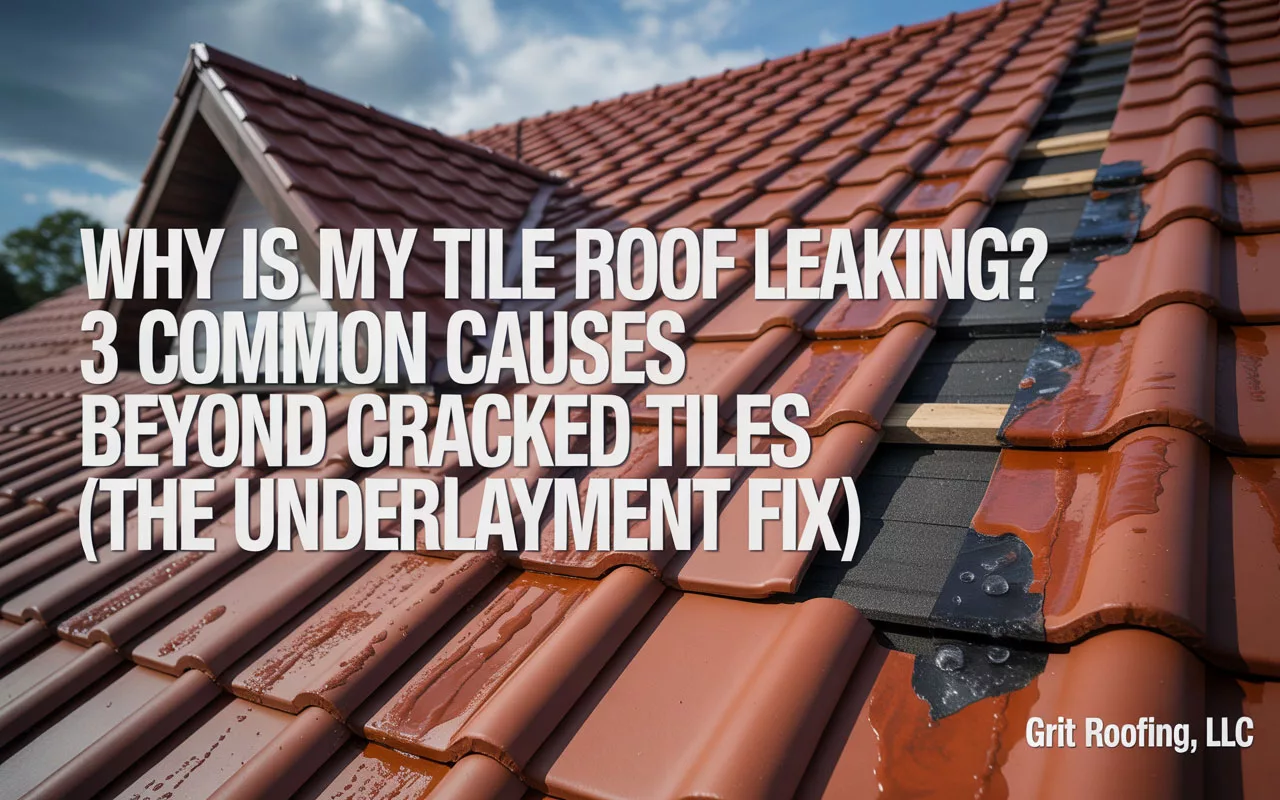
It’s a common misconception that tiles are the sole waterproofing layer. They are not. Tiles are the weather shedding layer. Their primary function is to block the sun’s UV rays and shed the bulk of rainwater. The true waterproof barrier is the underlayment, which is a specialized membrane installed beneath the tiles and directly on the roof deck. When the underlayment fails—which it inevitably will due to age, heat, and moisture—the tiles can no longer protect your home.
Cause 1: The Critical Underlayment Failure (The #1 Culprit)
In Florida, a typical asphalt-saturated felt or even low-grade synthetic underlayment can begin to break down in as little as 10 to 15 years, especially under the extreme heat buildup common beneath dark-colored tiles. This breakdown, known as “cooking,” causes the underlayment to become brittle, crack, and eventually disintegrate into a sandy powder.
The Problem with Failed Underlayment:
Once the underlayment is compromised, water that is naturally driven under the tiles by wind, capillary action, or poor drainage can reach the decking. This leads to wood rot, mold, and serious structural damage. Since the tiles are still in place, the water intrusion can travel far before appearing inside your home, making a precise Leak Diagnosis critical and complex.
The Solution: The Targeted Underlayment Fix
Addressing underlayment failure requires a delicate and specialized approach. We perform a strategic lift and relay operation: carefully removing tiles over the leak zone, replacing the failed material with a high-performance, self-adhering (peel-and-stick) synthetic underlayment that is rated for 20+ years, and then reinstalling the original tiles. This ensures the aesthetic is preserved while the waterproofing integrity is restored.
Internal Link Opportunity: If your tile roof is approaching 20 years old, it may be time to consider a full system overhaul. Explore your options on our Tile Roof Installation service page.
Cause 2: Failed Flashing and Valley Systems
Flashing is the metal material that protects the intersections of your roof—where two planes meet (valleys), around chimneys, skylights, and walls. These areas manage a massive volume of water runoff.
The Weakest Links:
- Valley Flashing Damage: Tile roof valleys are prone to debris buildup, which can trap water and cause the metal to corrode or the sealant to fail.
- Pipe Flashing Deterioration: The rubber boots around plumbing vents and pipes degrade faster than any other material on the roof. They become brittle and crack, funneling water directly into the attic.
These specialized repairs are covered in depth on our Flashing Repair page, emphasizing the need for robust sealant and proper tie-in to the underlayment system.
When dealing with flashings, it’s vital to adhere to the high-wind and water-resistance standards mandated in the state. Always refer to the latest guidelines set by the Florida Building Code for proper material and installation techniques.
Cause 3: Deterioration of Mortar or Foam Adhesives
Tiles are typically secured to the roof deck using screws or by being set in mortar or modern foam adhesive, particularly along the hip and ridge lines. Over time, UV exposure and tropical weather cause this securing material to break down.
The Danger of Loose Tiles:
When the mortar or foam deteriorates, the tiles become loose. While this doesn’t immediately cause a leak, it creates two major issues:
- Wind Lift: A loose tile is easily lifted and damaged during a storm, exposing the vulnerable underlayment beneath.
- Underlayment Abrasion: The loose tile slides and scrapes against the underlayment, acting like sandpaper and wearing a hole in the waterproof barrier.
Our Tile Roof Repair services include repointing or resetting loose tiles using specialized, flexible mortar or high-performance foam adhesives to secure the entire assembly and prevent secondary damage to the underlayment.
The GRIT Roofing Leak Diagnosis Process
Because leaks often originate far from where they appear in the ceiling, a precise Roof Leak Diagnosis is paramount. We don’t guess. Our process involves:
- Exterior Inspection: Checking all visible flashings, pipe boots, and ridge mortar.
- Interior Inspection: Looking for water travel paths and signs of mold or wet insulation in the attic.
- Controlled Water Testing: Systematically applying water to sections of the roof while observing the attic to pinpoint the exact failure location, especially when the underlayment is suspect.
This systematic approach ensures that the root cause—usually the underlayment or flashing—is repaired, not just the symptom. If you’re currently facing a major issue, see how we handle immediate crises on our Leak Diagnosis page.
If the leak is isolated to one flashing point and the underlayment is sound across 90% of the roof, a targeted repair is sufficient. However, if multiple leaks are appearing and the roof is over 15 years old, the underlying issue is likely widespread underlayment failure. In this scenario, investing heavily in small patches is inefficient. We will provide an honest assessment, guiding you towards the most cost-effective and long-term solution, which may be a full Roof Replacement utilizing the existing tiles if they are still structurally sound, combined with a brand-new, modern underlayment.
Tile Roof Maintenance and Prevention Tips
To avoid these expensive leaks, schedule a Roof Maintenance Tune-Up. This service involves:
- Clearing debris from valleys and gutters to ensure free-flowing water.
- Inspecting hip and ridge mortar for cracks and deterioration.
- Checking the integrity of all pipe boots and resealing minor cracks before they leak.
Get Your Tile Roof Leak Diagnosed Immediately
Don’t let a small leak destroy your beautiful tile roof and the structure of your home. The longer you wait, the more extensive the damage. As the leading local experts in Central Florida, GRIT Roofing, LLC has the specialized experience to diagnose and execute the proper Tile Roof Repair or Underlayment Fix swiftly and correctly.
Call us immediately for a professional leak diagnosis: Schedule Your Tile Roof Repair Estimate Today